What does the boxed warning on Dysport actually mean?
By Penelope Mataalii
Every vial of Dysport ships with a boxed warning, the most prominent kind of caution that appears in United States drug labeling. People booking a frown-line appointment often hear about it for the first time when they are handed a Medication Guide, and the wording can be alarming. This article walks through what the warning says, where the evidence behind it comes from, and how it relates to the side-effect figures recorded in cosmetic trials.
What does the warning say, word for word?
The FDA-approved Dysport prescribing information published on DailyMed titles the warning "Distant Spread of Toxin Effect." It states that postmarketing reports indicate the effects of Dysport and all botulinum toxin products may spread from the area of injection to produce symptoms consistent with botulinum toxin effects.
The label lists those symptoms: asthenia (unusual weakness), generalized muscle weakness, double vision, blurred vision, drooping eyelids, difficulty swallowing, voice changes, slurred speech, urinary incontinence and breathing difficulties. It says the symptoms have been reported hours to weeks after injection, and that swallowing and breathing difficulties can be life threatening, with reports of death.
Two details are easy to miss. First, the warning covers the whole drug class. The sentence reads "Dysport and all botulinum toxin products," so it is not a mark against one brand. Second, the label says the risk is probably greatest in children treated for spasticity, though it adds that symptoms can also occur in adults, particularly those with underlying conditions that would predispose them.
Where does the evidence for the warning come from?
The label is explicit that the warning rests on postmarketing safety data, meaning reports collected after approval across every use of these drugs. That matters because the approved uses differ a great deal in dose. The same prescribing information sets the frown-line dose at 50 units in total, split into five injections of 10 units. For adult spasticity, it allows up to 1,500 units in a single session.
The label does not say small doses are exempt. It notes that cases of spread have been reported "at doses comparable to or lower than the maximum recommended total dose," in both approved and unapproved uses. A fair reading is that the warning describes a rare, serious possibility that applies to the whole class, with the heaviest weight of concern on high-dose therapeutic treatment.
What did the frown-line trials record?
The trial data for the cosmetic use look different from the boxed warning list. In the pooled placebo-controlled trials summarized in the label, adverse reactions of any cause were recorded in 48% of the 398 people who received Dysport and in 33% of the 496 who received placebo. The most common were nasopharyngitis (10% with Dysport, 4% with placebo) and headache (9% and 5%).
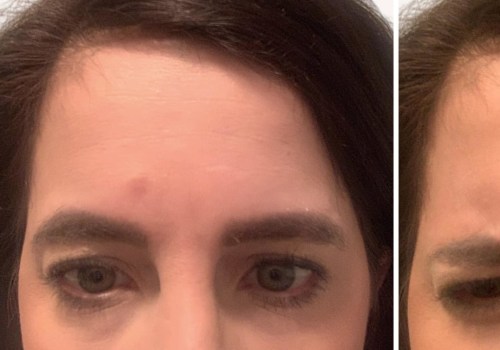
Eyelid drooping, called eyelid ptosis, appeared in 2% of the Dysport group and under 1% of the placebo group. Eyelid swelling was also recorded at 2%. Injection site pain and injection site reactions each came in at 3%.
A separate published review reached a similar picture. An analysis of five phase III trials in the Aesthetic Surgery Journal covered 2,160 adults who received at least one treatment cycle for frown lines. The authors reported that adverse event rates were similar between the treated and placebo groups, with the exception of injection site reactions and ptosis. In the repeat-dose studies they found no evidence of cumulative safety issues, and the incidence of treatment-emergent adverse events decreased over time.
Is a drooping eyelid the same thing as distant spread?
Not quite, and the label treats them in separate sections. Drooping eyelids appear in the boxed warning list as one possible sign of a wider effect. But the label also discusses ptosis as a local problem tied to where and how much is injected near the brow.
The dosing section gives injectors specific instructions aimed at this: avoid injecting near the muscle that lifts the upper lid, place the inner corrugator injections at least one centimeter above the bony ridge of the eye socket, and keep the injected volume accurate. The warnings section adds that in clinical trials, people who received a higher dose had an increased incidence of eyelid ptosis, and it tells prescribers not to exceed the recommended dose or frequency.
Who does the label say needs extra caution?
The prescribing information names several groups. People with pre-existing swallowing or breathing difficulties may be more susceptible to those complications. People with neuromuscular conditions such as myasthenia gravis, Lambert-Eaton syndrome or amyotrophic lateral sclerosis should be monitored particularly closely.
Dysport is contraindicated for anyone with a known hypersensitivity to any botulinum toxin product or to cow's milk protein, since the product may contain trace amounts of it, and for anyone with an infection at the planned injection site. The frown-line indication itself is limited to adults under 65.
Why does the label insist units cannot be converted?
Right beside the spread warning sits a second caution: Dysport units are specific to its own preparation and test method, and cannot be compared to or converted into units of any other botulinum toxin product. The carton repeats this on the outside.
The point is practical. A number that is routine for one product could be a serious overdose or underdose for another. A clinical overview in the Journal of the European Academy of Dermatology and Venereology makes the same argument, stating that the efficacy and safety profiles reported for this formulation are unique to it and cannot be generalized to other products. If a provider quotes a unit count, it only means something alongside the product name.
Which symptoms should prompt a call?
The patient counseling section tells people to report any unusual symptoms, including difficulty swallowing, speaking or breathing, and any known symptom that persists or worsens. It also asks people to report signs of dry eye, such as eye pain, irritation, light sensitivity or changes in vision.
One line applies to daily life: if loss of strength, muscle weakness, blurred vision or drooping eyelids occur, the label advises against driving or other potentially hazardous activities.
Frequently asked questions
- Does only Dysport carry this boxed warning? No. The label text applies the warning to Dysport and all botulinum toxin products.
- How soon could spread symptoms appear? The label says they have been reported hours to weeks after injection.
- How common was eyelid drooping in the frown-line trials? In the pooled placebo-controlled trials in the label, 2% of people who received Dysport and under 1% who received placebo.
- How often can frown-line treatment be repeated? The label says no more frequently than every three months, and notes the effect may last up to four months.
- Can a milk allergy matter? Yes. The label lists known hypersensitivity to cow's milk protein as a contraindication.
This article is general information, not medical advice, and does not replace a consultation with a licensed provider.